


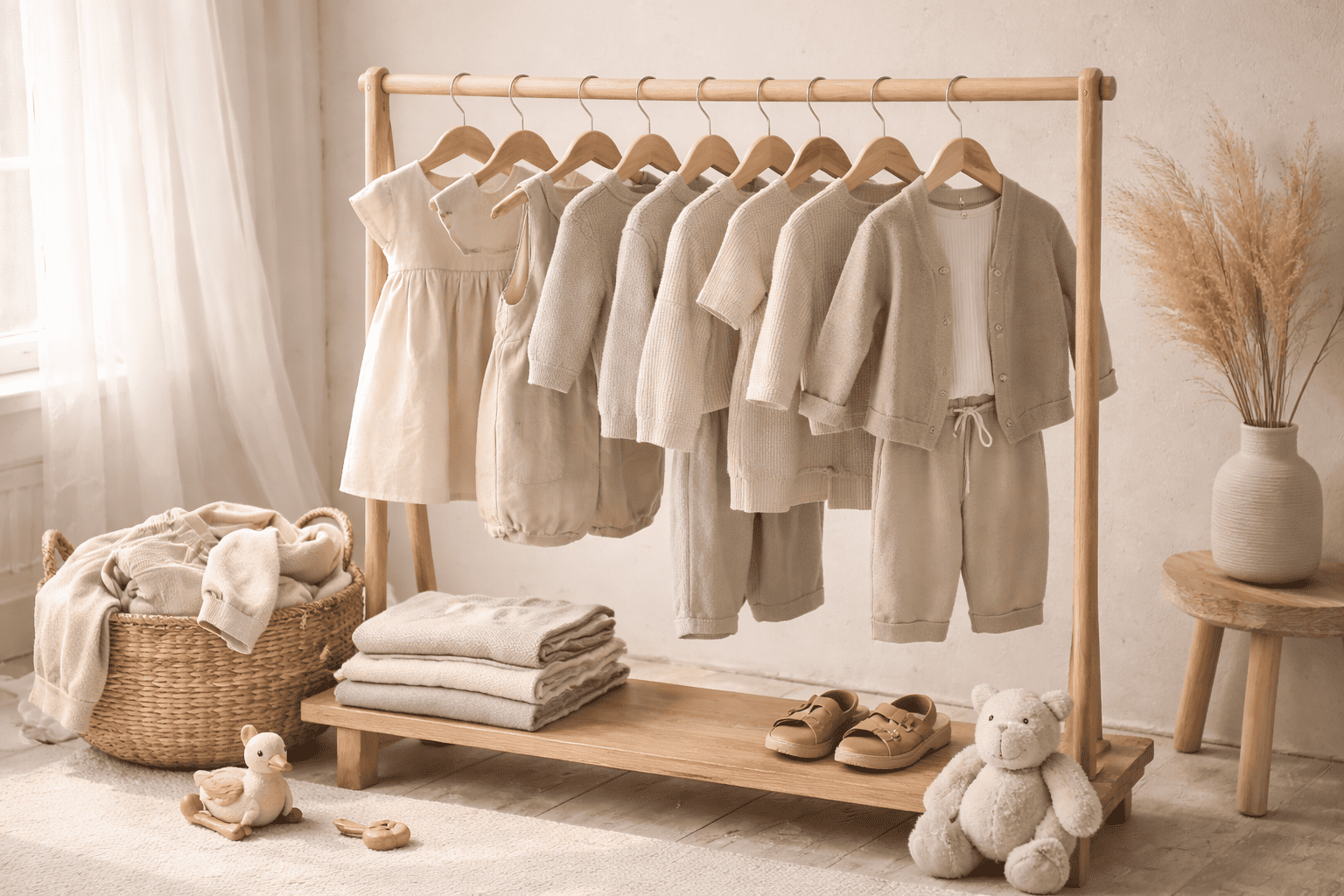

Dedicated Toddlers of Fashion: How Kidswear Became Quietly Minimal
Once upon a time, children’s clothing was loud. It sparkled, jingled, clashed, and shouted its presence with cartoon characters, neon colors, and slogans that competed for attention. Childhood fashion was supposed to be playful, chaotic, and unapologetically bright. But somewhere along the way, something changed. Today’s toddlers are dressed in muted tones, clean lines, and silhouettes that look more at home in a design studio than a playroom. Kidswear has undergone a silent revolution and minimalism is at its center.
Welcome to the age of the dedicated toddler of fashion.
From Maximalist Mayhem to Soft Neutrals
The shift did not happen overnight. For decades, kidswear leaned heavily into visual excess. Prints were bold, colors were primary, and every garment seemed to shout “fun.” But as adult fashion began embracing restraint and refinement, those values slowly filtered downward.
Modern parents, raised on fast fashion overload, are now seeking calm. Minimalist kidswear with its soft beiges, greys, sage greens, and off-whites offers visual relief in a noisy world. Clothing no longer screams for attention. It whispers reassurance.
This move toward understatement reflects a broader cultural desire for simplicity, mindfulness, and order even in childhood.
The Influence of Adult Fashion
One of the strongest drivers behind minimalist kidswear is the mirroring of adult style. Today’s parents don’t want children’s clothing to exist in a separate aesthetic universe. They want coherence. Family wardrobes now feel coordinated rather than chaotic.
Clean silhouettes, neutral palettes, and natural fabrics dominate modern kidswear collections, echoing the rise of “quiet luxury” in adult fashion. Miniature trench coats, pared-back knits, and unbranded basics make toddlers look less like walking cartoons and more like tiny editorial muses.
It’s fashion by osmosis and toddlers are absorbing it effortlessly.
Instagram, Aesthetics, and the Curated Childhood
Social media has played a powerful role in reshaping kidswear. Platforms favor clean visuals, soft lighting, and neutral backdrops elements that minimalist clothing supports perfectly. A beige romper photographs better than a neon dinosaur tee.
As parenting content became increasingly aesthetic-driven, children’s clothing followed suit. Minimalist outfits fit seamlessly into curated feeds and lifestyle imagery, reinforcing the trend through constant exposure.
This isn’t about vanity alone it’s about storytelling. Neutral clothing allows moments to feel timeless, untethered from trends or loud branding. Childhood, reframed as a soft, cinematic experience.
Comfort as the New Luxury
Minimalist kidswear isn’t just about looks it’s about function. Natural fibers, relaxed fits, and breathable fabrics have become defining features. These clothes are designed to move, nap, tumble, and grow.
Parents are increasingly conscious of how clothing feels against sensitive skin. Gone are stiff seams, synthetic fabrics, and excessive embellishments. In their place are organic cottons, soft wools, and thoughtful construction.
In a world where children are overstimulated from an early age, comfort becomes a quiet form of care. Minimalism, here, is practical compassion.
The Philosophy Behind the Palette
Neutral colors do more than look stylish they offer psychological calm. Studies suggest that softer tones can create a soothing environment, especially for young children. Minimalist kidswear aligns with this idea, favoring colors that ground rather than excite.
This doesn’t mean childhood is being stripped of joy. Instead, joy is being redefined. It lives in texture, movement, and ease rather than in visual overload. A simple outfit allows the child not the clothing to take center stage.
In this philosophy, fashion supports development rather than competing with it.
Sustainability and the Slow Fashion Shift
Minimalist kidswear also reflects a growing commitment to sustainability. Neutral, timeless designs are easier to pass down, resell, or rewear across seasons. They don’t feel dated after a few months.
As parents become more environmentally aware, they are gravitating toward fewer, better-made pieces. Minimalism supports this approach, encouraging quality over quantity and longevity over novelty.
Children outgrow clothes quickly. Investing in versatile, durable pieces makes both ethical and economic sense. Minimalism, in this context, is a conscious choice not an aesthetic accident.
Are Toddlers Losing Their Playfulness?
Critics argue that minimalist kidswear risks erasing the spontaneity of childhood. Where are the rainbows, the animals, the fantasy? Is fashion imposing adult seriousness on children too soon?
But minimalism doesn’t prohibit play it simply reframes it. Many parents mix pared-back basics with colorful accessories, textured layers, or playful silhouettes. The result is balance rather than restraint.
Playfulness doesn’t have to be printed across a shirt. It can exist in muddy knees, messy hair, and imaginative worlds far beyond clothing.
The Future of Kidswear
Minimalism in kidswear shows no sign of fading. As fashion continues to value authenticity, sustainability, and emotional well-being, this quieter approach feels increasingly aligned with modern parenting.
Designers are responding by creating collections that feel thoughtful rather than trend-driven. The focus is on craftsmanship, comfort, and cohesion values once reserved for adult fashion, now lovingly extended to children.
The toddler of today isn’t overdressed. They’re intentionally dressed.
Final Thoughts
The rise of minimalist kidswear reflects more than a style preference it reveals a cultural shift. Parents are choosing calm over chaos, longevity over novelty, and intention over excess. In doing so, they are redefining what it means to dress a child.
The dedicated toddler of fashion doesn’t chase trends or shout for attention. They move freely, dressed in softness and simplicity, while the world rushes loudly around them.
And perhaps that’s the point. In dressing children quietly, we’re learning to listen more closely to them, and to ourselves.
