


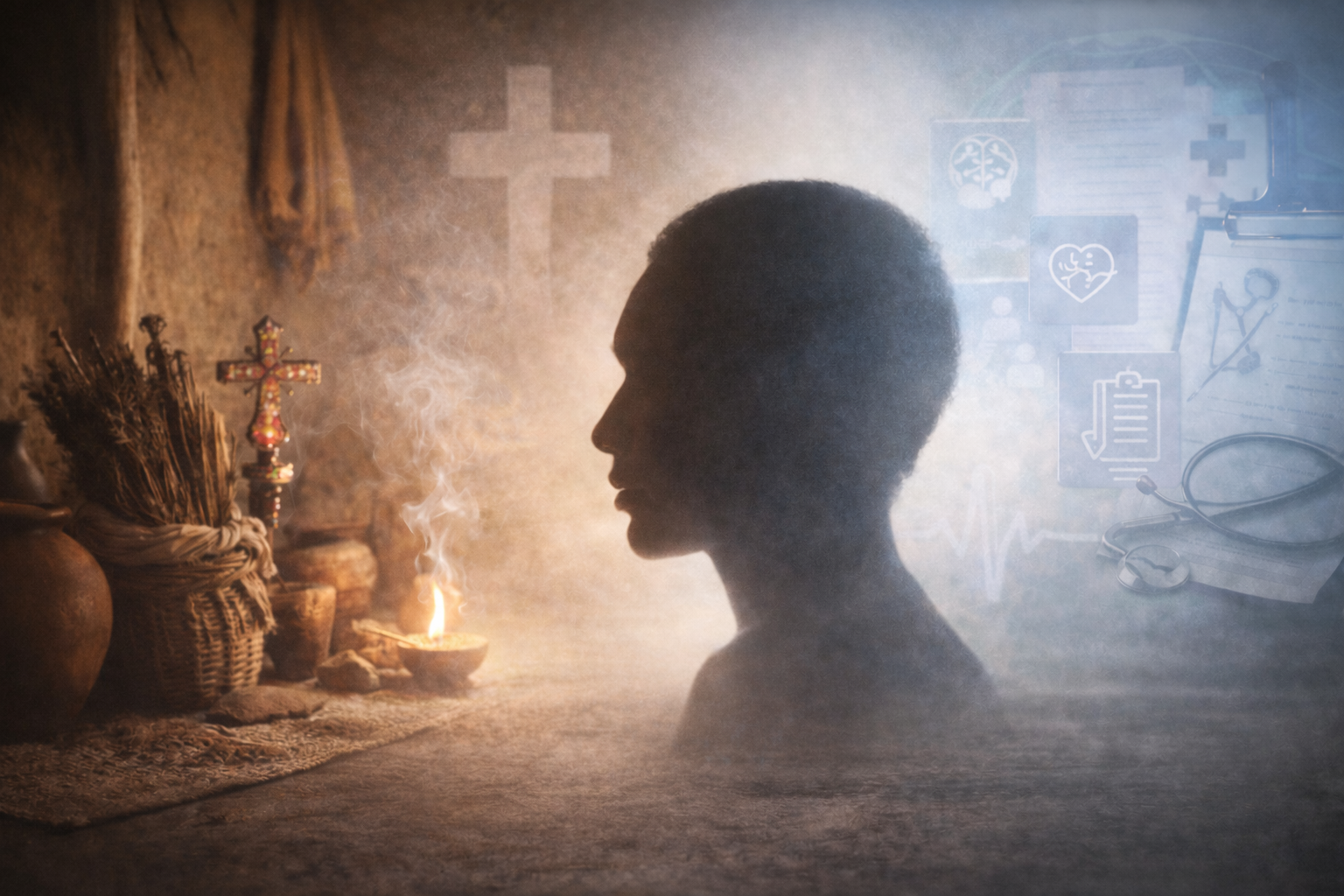

Between Faith and Medicine: How Traditional Healers Shape Mental Health Care in Ethiopia
In Ethiopia, the journey toward mental health care often begins far from a hospital. It starts in prayer halls thick with incense, in sacred springs believed to cleanse the spirit, and in the quiet counsel of traditional healers whose knowledge has been passed down for generations. For countless families facing severe mental health conditions, these spaces are not alternatives to care—they are the first door opened in desperation and hope.
A growing body of research, including findings from a scoping review on the involvement of traditional and faith healers in Ethiopia, sheds light on a complex reality. These healers are deeply woven into the mental health landscape, shaping how illness is understood, treated, and endured.
A Cultural Pathway to Care
In many Ethiopian communities, mental illness is not viewed solely as a medical condition. It is often understood through spiritual, social, or moral lenses. Conditions such as psychosis, severe depression, or bipolar disorder may be attributed to spirit possession, curses, divine punishment, or the influence of unseen forces.
Within this worldview, turning to traditional or faith healers is not a rejection of science—it is a culturally meaningful response. These healers are accessible, trusted, and embedded in community life. They speak the language of belief, history, and shared identity.
For families overwhelmed by fear and confusion, this familiarity offers comfort where clinical settings may feel distant or intimidating.
The Healers at the Center of Trust
Traditional healers in Ethiopia vary widely. Some are herbalists using plant-based remedies. Others are spiritual leaders who rely on prayer, fasting, holy water, or exorcism rituals. Faith healers often work within Christian or Islamic traditions, drawing authority from religious texts and communal faith.
What unites them is trust. Many people believe these healers understand suffering in a way that modern systems do not. They offer time, listening, and explanation—elements often missing in under-resourced mental health services.
This trust gives healers enormous influence over treatment decisions, including whether and when individuals seek biomedical care.
When Belief and Treatment Collide
The scoping review highlights both the value and the risks of this dynamic. While traditional and faith healers provide emotional and spiritual support, their practices sometimes delay access to evidence-based treatment. In cases of severe mental illness, delays can mean prolonged suffering, worsening symptoms, and increased risk of harm.
Some healing practices involve physical restraint, prolonged isolation, or forced fasting. Though often motivated by belief rather than malice, these methods raise serious ethical and human rights concerns.
Families are frequently caught in the middle—torn between cultural loyalty and the visible deterioration of their loved ones.
Voices of Patients and Caregivers
Experiences shared in the reviewed studies reveal deep emotional complexity. Some patients describe moments of relief, clarity, and hope during spiritual healing. Others recount fear, confusion, and trauma—particularly when subjected to restrictive practices.
Caregivers often express gratitude for healers’ availability and compassion, while also acknowledging frustration when improvements fail to materialize. Many families cycle between traditional healing and biomedical services, searching for answers wherever they can be found.
This pattern reflects not indecision, but persistence—a refusal to give up on those they love.
Health Professionals: Between Skepticism and Reality
Mental health professionals in Ethiopia often view traditional healing with caution. Concerns about misinformation, delayed treatment, and harmful practices are common. Yet there is also growing recognition that ignoring traditional healers is neither realistic nor effective.
With limited psychiatric services and a shortage of trained professionals, traditional healers fill a gap the formal system cannot yet meet. Some clinicians acknowledge that collaboration—rather than confrontation—may offer a path forward.
The challenge lies in building mutual understanding without compromising safety or scientific integrity.
Toward Collaboration Instead of Conflict
One of the most compelling themes emerging from the scoping review is the potential for collaboration. Training traditional and faith healers to recognize severe symptoms, make timely referrals, and avoid harmful practices could transform them into allies rather than obstacles.
Pilot programs suggest that when healers are engaged respectfully, they are often willing to cooperate. Many express interest in learning how biomedical treatment works, particularly when framed as complementary rather than contradictory.
Such partnerships could bridge the divide between belief and medicine—bringing care closer to those who need it most.
The Role of Policy and Community Dialogue
Sustainable change requires more than individual goodwill. National mental health policies must acknowledge the role of traditional healers and provide frameworks for safe collaboration. Community education campaigns can help reduce stigma while promoting early treatment-seeking.
Importantly, any intervention must respect cultural identity. Dismissing faith-based practices risks alienating communities and driving care further underground.
Progress lies in dialogue, not dismissal.
A Delicate Balance of Hope and Harm
Traditional and faith healers in Ethiopia stand at a crossroads of compassion and controversy. They offer meaning where medicine may feel cold, and presence where systems fall short. Yet without oversight or integration, their involvement can unintentionally deepen suffering.
The scoping review does not call for erasure—but for evolution. It asks a difficult question: how can care honor belief while protecting lives?
Final Reflection: Healing in All Its Forms
Mental health care in Ethiopia is not a single road—it is a network of paths shaped by culture, faith, history, and necessity. Traditional and faith healers are part of that landscape, for better and for worse.
The future of care depends on weaving these paths together thoughtfully. When respect meets evidence, and belief meets safety, healing becomes more than a hope—it becomes a shared responsibility.
And in that shared space, lives can truly begin to change.
