







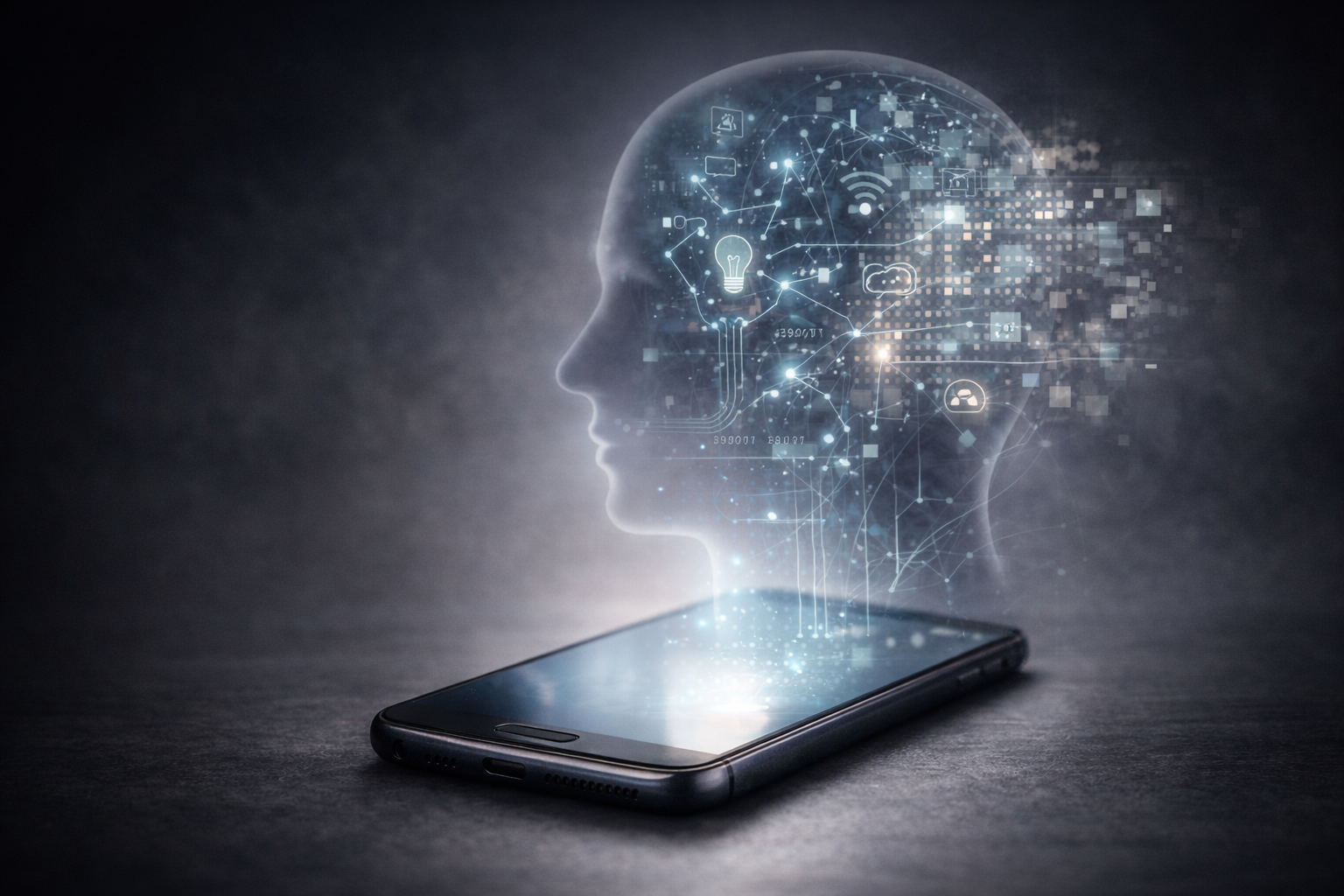


Inside the Smartphone Effect: How Daily Screen Time Is Altering Human Thought
The human brain evolved over thousands of years to focus, remember, and reflect. Then, in just a few decades, the mobile phone arrived—and everything changed. What began as a simple communication tool has become an extension of our minds, quietly reshaping how we think, feel, learn, and connect.
Notifications interrupt our thoughts. Screens replace silence. Scrolling fills moments once reserved for boredom, reflection, or conversation. Without realizing it, our brains are adapting—rewiring themselves to fit the rhythm of a world that never stops buzzing.
The Age of Constant Stimulation
Mobile phones have trained our brains to expect instant reward. A message arrives. A post gets liked. A video plays automatically. Each interaction releases a small hit of dopamine—the brain’s pleasure chemical. Over time, our minds begin to crave these tiny rewards, pushing us to check our phones again and again.
This constant stimulation has consequences. Attention spans are shrinking. Deep focus feels harder to maintain. Tasks that require sustained concentration—reading, studying, creative thinking—now compete with the pull of endless digital noise. Our brains, once comfortable with stillness, now resist it.
Attention in Fragments
Before smartphones, focus was linear. You did one thing at a time. Today, attention is fragmented. We jump between apps, messages, videos, and notifications, often within seconds.
This rapid switching trains the brain to skim rather than dive deep. We consume information in short bursts instead of building long, connected thoughts. Over time, this habit can weaken our ability to concentrate, remember details, and solve complex problems.
Multitasking feels productive, but the brain pays a price. Each switch drains mental energy, leaving us more exhausted and less efficient.
Memory in the Age of Google
Why remember facts when your phone remembers them for you?
Mobile phones have become external memory banks. Phone numbers, directions, dates, and even basic knowledge now live in our devices. While this convenience frees mental space, it also changes how memory works.
Our brains are learning not to store information—but to store where to find it. This shift alters recall, making us more dependent on devices for even simple tasks. When the phone is gone, many feel lost, anxious, or disconnected.
Emotional Rewiring and Validation Loops
Mobile phones don’t just shape how we think—they shape how we feel.
Social media platforms are designed around feedback: likes, shares, comments, views. Each reaction reinforces behavior, subtly training the brain to seek external validation. Over time, self-worth can become tied to digital response.
This emotional loop can increase anxiety, comparison, and self-doubt. The brain becomes hyper-aware of social approval, scanning constantly for affirmation or rejection. For younger users especially, this can deeply affect emotional development and self-esteem.
Sleep Under Siege
The brain depends on sleep to repair, reset, and process emotions. Mobile phones, however, have invaded bedtime.
Blue light from screens suppresses melatonin, the hormone that signals sleep. Late-night scrolling keeps the brain alert when it should be winding down. Notifications interrupt rest, fragmenting sleep cycles.
Chronic sleep disruption affects memory, mood, decision-making, and long-term brain health. A tired brain is more reactive, less focused, and more vulnerable to stress.
The Rise of Digital Anxiety
With constant connectivity comes constant pressure.
Messages demand instant replies. News updates bring endless crisis. Social feeds create the illusion that everyone else is more successful, happier, or more productive. The brain remains in a state of low-level alert, rarely fully resting.
This continuous stimulation can heighten anxiety and reduce emotional resilience. Silence feels uncomfortable. Being offline feels unnatural. The brain forgets how to switch off.
Children, Phones, and Developing Brains
For developing brains, the impact is even greater. Children exposed to screens early may struggle with attention, emotional regulation, and social skills. Fast-paced content conditions young minds to seek constant stimulation, making real-world interactions feel slow by comparison.
While technology can educate and connect, unchecked use during critical developmental years can shape neural pathways in ways we are only beginning to understand.
Is the Brain Damaged—or Just Changed?
The story isn’t all dark.
The brain is remarkably adaptable. Mobile phones have enhanced certain skills—visual processing, rapid information scanning, global communication, and problem-solving speed. We are more connected, informed, and capable in many ways.
But adaptation comes with trade-offs. What we gain in convenience, we risk losing in presence.
Reclaiming Control in a Digital World
The brain changes based on how it’s used. This means the future isn’t fixed.
Simple habits can restore balance: turning off non-essential notifications, setting screen-free hours, reading without interruptions, sleeping without phones nearby, and allowing moments of boredom.
Boredom, once feared, is where creativity and reflection are born.
The Silent Evolution Continues
Mobile phones haven’t destroyed our brains—but they have reshaped them. Quietly. Constantly. Irreversibly, unless we choose otherwise.
The question is no longer whether phones are changing us. They already have.
The real question is whether we will let them control our minds—or learn to use them without losing ourselves.


