


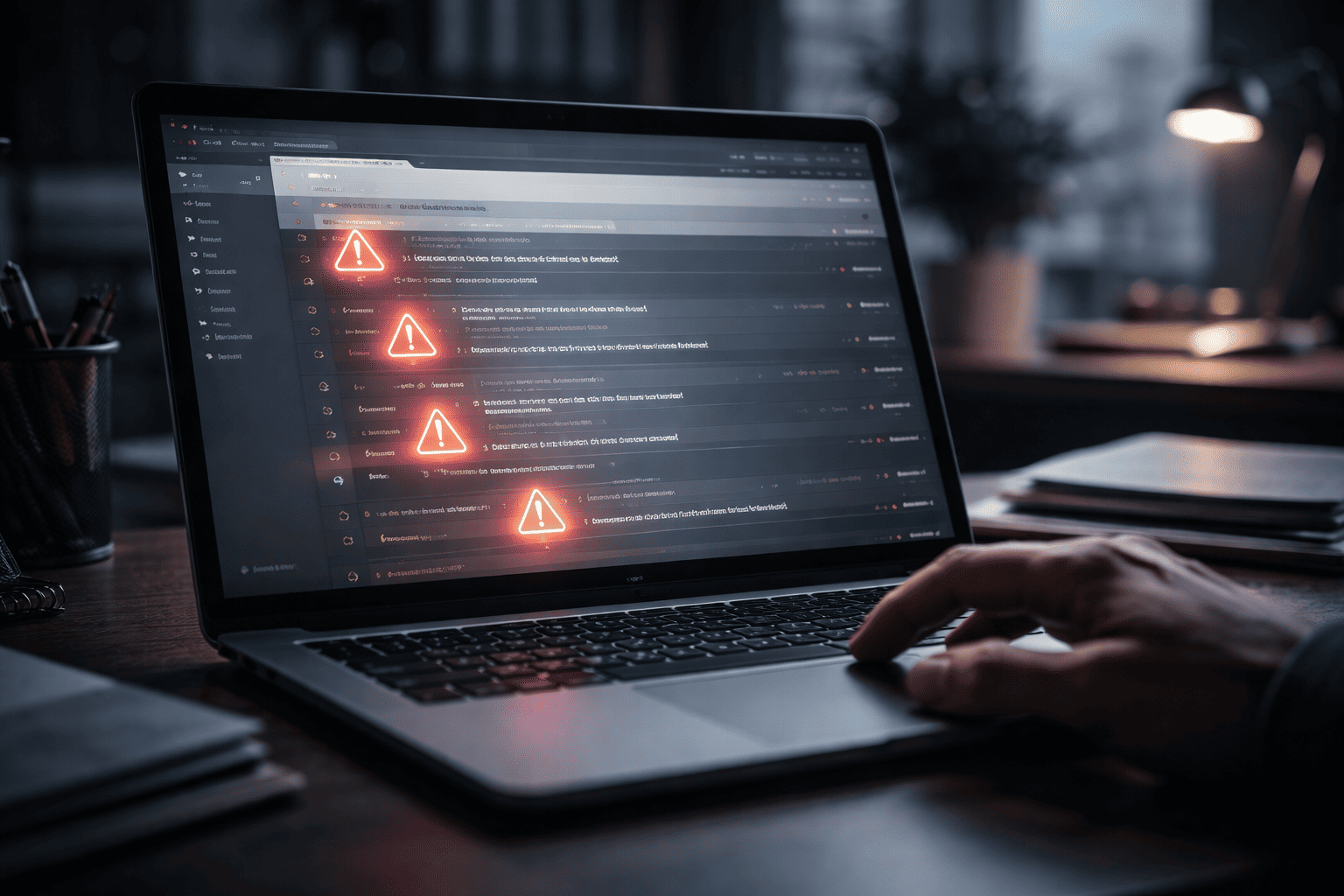

Firms Warned to Be on ‘High Alert’ as Scam Emails Surge
A silent threat is moving through inboxes across the business world, and experts are sounding the alarm. Companies of all sizes are being urged to remain on “high alert” as a new wave of sophisticated scam emails targets employees, executives, and entire organisations with alarming precision.
What was once easy to spot a poorly worded message from an unknown sender has evolved into something far more dangerous. Today’s scam emails are polished, persuasive, and often terrifyingly convincing. Cybercriminals are no longer casting wide nets. They are studying their targets, mimicking trusted contacts, and exploiting moments of pressure to slip past digital defences.
According to cybersecurity specialists, the volume of scam emails hitting corporate systems has surged sharply, with attackers refining their tactics to exploit remote work, fast-paced decision-making, and overworked staff. The result is a perfect storm: employees are tired, inboxes are crowded, and one wrong click can open the door to devastating consequences.
At the heart of the threat is social engineering emails designed not to hack systems, but to hack people. These messages often appear to come from senior managers, suppliers, banks, or government bodies. They demand urgent action: approve a payment, reset a password, download a document. The sense of urgency is deliberate, pushing recipients to act before thinking.
In some cases, the emails are almost indistinguishable from legitimate correspondence. Company logos are copied flawlessly. Email addresses are spoofed with near-identical spellings. Even writing styles are replicated, making the messages feel familiar and trustworthy. By the time suspicion arises, the damage may already be done.
The financial stakes are enormous. A single successful scam can cost a firm thousands or even millions of dollars. Beyond direct losses, businesses face reputational damage, operational disruption, and the risk of sensitive data falling into criminal hands. For smaller firms, one incident can be enough to threaten survival.
But money is only part of the story. Scam emails are increasingly being used as gateways to broader cyberattacks. A clicked link can install malware, grant access to internal systems, or allow attackers to move laterally through a network. What begins as an innocent-looking email can end in ransomware locking down entire operations.
Security professionals warn that no organisation is too small or too obscure to be targeted. In fact, smaller firms are often seen as easier prey, lacking dedicated IT teams or advanced security tools. Meanwhile, large corporations face constant attacks simply because of the scale of their operations and the value of their data.
The rise of artificial intelligence has added a new layer of danger. AI-powered tools are now being used by criminals to generate flawless emails at scale, eliminating the spelling errors and awkward phrasing that once served as red flags. These tools can adapt messages instantly, tailoring them to specific industries, roles, or even individuals.
In response, experts stress that technology alone is not enough. Firewalls and spam filters remain essential, but the frontline defence is human awareness. Employees must be trained to recognise warning signs, question unexpected requests, and pause before acting especially when an email demands urgency or secrecy.
Key red flags include unexpected attachments, unusual payment requests, changes to bank details, and messages that pressure recipients to bypass normal procedures. Cybersecurity advisers emphasise a simple rule: if something feels off, it probably is.
Companies are also being urged to reinforce internal controls. Clear approval processes, multi-factor authentication, and verification steps for financial transactions can dramatically reduce the risk of successful scams. A phone call to confirm a request may feel old-fashioned, but it remains one of the most effective defences.
Leadership plays a crucial role. When senior executives model cautious behaviour and encourage staff to speak up about suspicious emails, it creates a culture of vigilance rather than fear. Employees should feel supported when they report potential threats even if it turns out to be a false alarm.
Regulators and industry bodies have echoed the warnings, urging firms to treat scam emails as a serious business risk rather than a minor IT issue. In an interconnected digital economy, a single compromised inbox can ripple outward, affecting partners, clients, and supply chains.
The message from experts is clear and urgent: complacency is the enemy. Cybercriminals rely on routine, distraction, and trust. They succeed not because systems are weak, but because humans are human.
As scam emails grow more advanced and relentless, businesses must adapt just as quickly. Vigilance, training, and a willingness to slow down in a fast-moving digital world may be the difference between a close call and a costly disaster.
In the modern workplace, the inbox has become a battleground. And every employee, from intern to CEO, is on the front line.
