

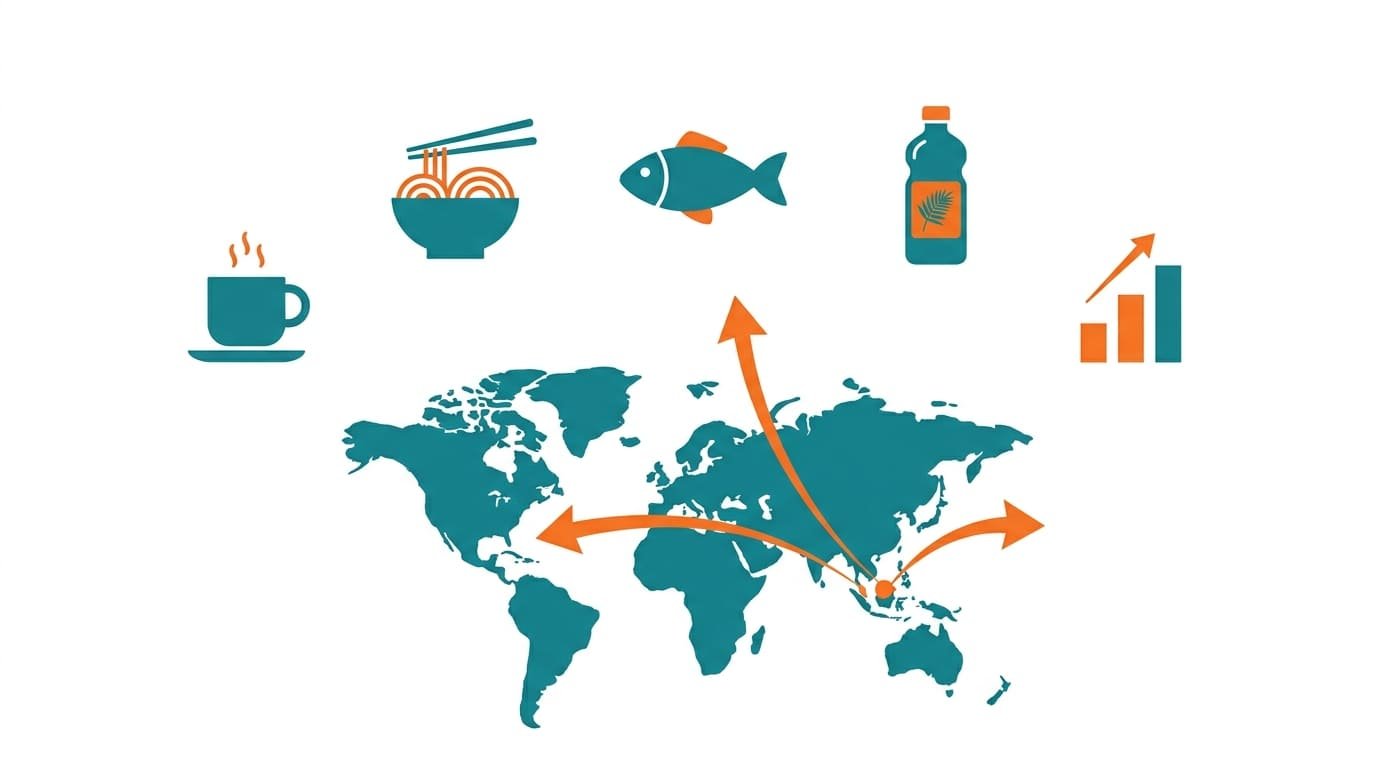

Malaysian food export trends 2026 market analysis shows why Malaysia ranks among Southeast Asia’s most dynamic food exporters. Strong halal credentials, a growing processed food sector, and strategic trade agreements are shaping what global buyers expect from Malaysian suppliers. This guide covers where the industry is heading and how businesses can benefit.
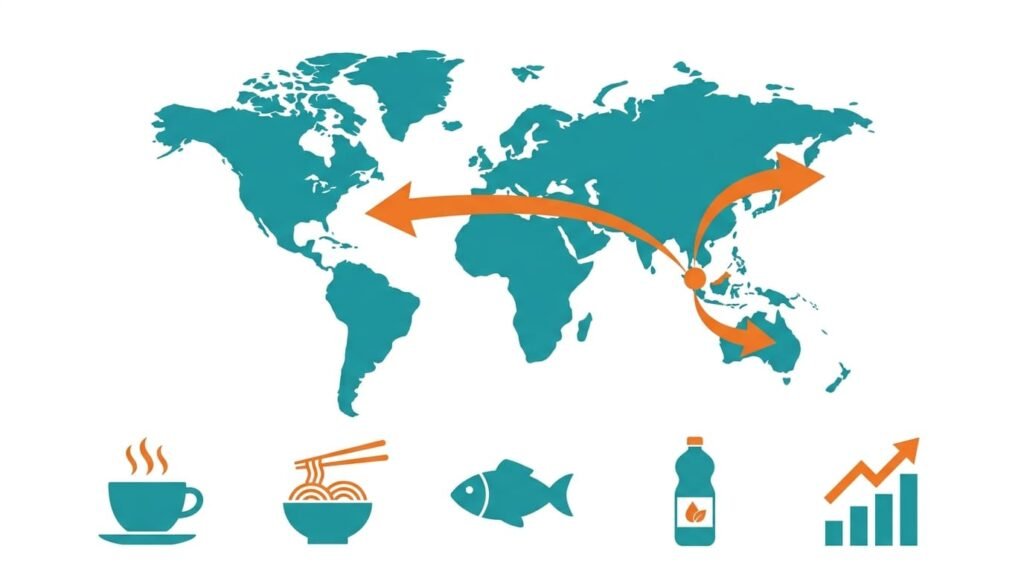
Why Malaysia Is a Rising Food Export Hub
Malaysia combines a strategic location, modern port infrastructure, and a trusted halal ecosystem. Its food manufacturers serve both Muslim-majority and mainstream international markets. Government agencies such as MATRADE also support exporters with market access, trade missions, and promotional programs.
Malaysia Food Export Trends 2026 Market Analysis
This Malaysian Food Export Trends 2026 Market Assessment indicates a constant demand for price-driven ready-to-consume goods, while bulk goods remain important. Exporters are moving from uncooked ingredients to branded packaged goods that earn better margins and build customer loyalty.
Key trends shaping the marketplace:
- Halal-certified products: Demand continues to grow within the Middle East, Africa and Central Asia.
- Processed and easily accessible ingredients: instant noodles, sauces, snacks and frozen meals are growing rapidly.
- Drink: White espresso, tea and functional drinks are finding a place on international shelves.
- Seafood and frozen goods: Advanced red-chain logistics guide wider distribution.
- Sustainability: Buyers are increasingly deciding on traceable, green, and responsibly sourced goods.
- E-Business Channels: Cross-border online platforms help SMEs reach customers at once.
Malaysian food export trends 2026 market analysis: Top export destinations and product categories
Singapore, China, Indonesia, Thailand, and Japan remain in the priority positions due to proximity and strong trade relationships. Meanwhile, the Gulf countries have become extra important for halal-certified goods.
Popular export categories include:
- Palm oil and food ingredients based primarily on palm
- Cocoa trade and confectionery goods
- Seafood and frozen ingredients
- Instant noodles, snacks and biscuits
- Coffee, tea and well-prepared liquids for drinking
Malaysian food export trends 2026 market analysis: Challenges facing Malaysian food exporters
Despite strong capabilities, exporters face real limitations:
- Immature cooling and increasing logistical fees
- Strict guidelines for food preservation and labeling in holiday markets
- Currency fluctuations affecting earnings margins
- Competition from Thailand, Vietnam and Indonesia
Businesses that invest in better management, certification, and symbol design are highly positioned to overcome these pressures.
How trade agreements support growth
Together with the RCEP and CPTPP, the agreements reduce tariffs and simplify customs procedures, making overseas Malaysian goods more competitive. Exporters who accept the Rules of Origin and documentation requirements can use those benefits to enter new markets faster.
FAQs
1. What are Malaysia’s top food export products?
Palm oil, cocoa products, seafood, instant noodles, and beverages.
2. Is halal certification required to export Malaysian food?
Yes, for Muslim-majority markets, JAKIM certification is essential.
3. What are the top destinations for Malaysian food exports?
Singapore, China, Indonesia, Thailand, Japan, and the Gulf countries.
4. How do I start exporting food from Malaysia?
Register your company, get halal certification, and contact MATRADE.
5. What is the Malaysia food export forecast?
Growth is expected to continue, driven by halal, processed foods, and beverages.
6. What are the main challenges for Malaysian food exporters?
Rising costs, strict labelling rules, and competition from Thailand and Vietnam.
Conclusion:
Malaysia is predicted to lead food exports with the help of halal products, processed ingredients, and innovative beverages, factoring in an enduring boom. Companies that adapt to customer prospects, meet worldwide needs, and use trade agreements will gain the most from this momentum.
Ready to grow your food export business? Start by getting your halal certification, for example, by researching your target market and connecting with MATRADE for export assistance. Contact our group today for a tailored export strategy, or subscribe to explore additional marketplaces.
