



The push to remove the US ambassador to Canada is gaining attention as a growing number of Canadians demand action against Ambassador Pete Hoekstra. The campaign comes amid rising tensions between Canada and the United States over trade, political rhetoric and President Donald Trump’s repeated references to Canada becoming the “51st state.”
A federal petition calling for Hoekstra to be declared persona non grata has attracted significant support. The issue could receive further attention when Parliament returns in the fall. For many Canadians, the controversy is not simply about one ambassador. Instead, it reflects wider concerns about Canada’s relationship with its powerful southern neighbor.
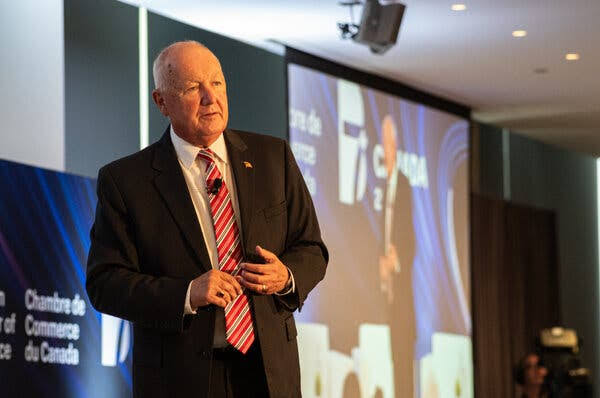
US ambassador to Canada Petition Calls for Ambassador’s Removal
The campaign against Hoekstra centers on a petition asking the Canadian government to declare him persona non grata. In diplomatic terms, this would mean that Canada no longer accepts him as a representative of the United States and could request that he leave the country.
The petition has gained momentum as frustration grows over comments linked to the Trump administration. Supporters argue that an ambassador should help maintain stable relations between two countries. They believe Hoekstra’s public statements have instead added to tensions.
The campaign is being sponsored in Parliament by Green Party MP Elizabeth May. This gives the petition a route into the House of Commons, although parliamentary sponsorship does not necessarily mean the MP agrees with every claim made by petition organizers.
Trump’s ‘51st State’ Comments Fuel Anger
One of the main reasons behind the controversy is Trump’s repeated suggestion that Canada could become the 51st US state. Trump has made similar comments several times, often in connection with trade disputes and disagreements between Washington and Ottawa.
Many Canadians have rejected the idea strongly. Canada is an independent country with its own government, laws and national identity. As a result, comments about making Canada part of the United States have been viewed by some Canadians as disrespectful rather than humorous political rhetoric.
The issue became even more controversial when Hoekstra shared a Trump message referring to the “51st State.” Critics argued that the ambassador should have taken a more careful approach because of his diplomatic position.
Hoekstra, however, has defended his role. His position is that he represents the US president in Canada and is therefore expected to communicate the administration’s views.
US ambassador to Canada Why Hoekstra Has Become a Target
Ambassadors often have to balance two responsibilities. They represent their own governments while also maintaining communication with officials and citizens in the country where they serve.
Critics of Hoekstra believe that balance has become difficult in the current political climate. They argue that openly promoting controversial messages from Washington can make it harder for the ambassador to build trust in Canada.
Supporters of the ambassador see the situation differently. They argue that Hoekstra is simply carrying out his diplomatic responsibilities by communicating the Trump administration’s position.
That disagreement has placed Hoekstra at the center of a much broader argument over the future of Canada-US relations.
What Does ‘Persona Non Grata’ Mean?
The term persona non grata is used in international diplomacy when a country declares that a foreign diplomat is no longer welcome.
It is a serious measure and can create a significant diplomatic dispute. However, a petition alone does not automatically remove an ambassador. The Canadian government would have to make the final decision.
Canada has previously used the measure against foreign diplomats. In 2023, Ottawa declared Chinese diplomat Zhao Wei persona non grata following a dispute involving allegations of foreign interference.
Because the United States is Canada’s closest neighbor and one of its most important economic and security partners, taking similar action against a US ambassador would carry much greater political weight.
US ambassador to Canada Parliament Could Debate the Issue This Fall
The petition could become an important political issue when Canada’s Parliament returns in the fall.
If the petition is formally presented, the government may face questions about its position on Hoekstra and the wider dispute with Washington. Opposition politicians could also use the debate to criticize the government’s handling of relations with the Trump administration.
However, Canadians should not expect a petition to automatically result in Hoekstra being removed. Parliamentary petitions can draw attention to an issue and require a government response, but they do not directly order the government to expel a foreign diplomat.
The government would need to consider the potential consequences before taking such a major diplomatic step.
Canada and the US Face Wider Tensions
The dispute over the US ambassador to Canada comes at a difficult time for both countries.
Canada and the United States have close economic, military and political ties. Millions of people travel between the two countries every year, while businesses on both sides depend heavily on cross-border trade.
At the same time, disagreements over tariffs and trade policy have created new pressure. Trump’s comments about Canada’s future have added another sensitive issue to the relationship.
For Canadian officials, maintaining cooperation with Washington remains important. However, they must also respond to concerns from Canadians who believe their country’s sovereignty should not be questioned.
A Test for the Diplomatic Relationship
The growing campaign against Hoekstra could become an important test for Canada-US relations. If Ottawa ignores the calls for his removal, critics may accuse the government of failing to respond strongly enough to Washington’s rhetoric.
On the other hand, removing the ambassador could create a serious diplomatic confrontation with the United States.
That leaves Canadian officials with a difficult choice. They must defend Canadian interests while keeping communication with Washington open.
The situation also shows how quickly diplomatic disagreements can become public political battles. What once might have remained behind closed doors is now being debated openly by politicians, activists and ordinary citizens.
What Happens Next?
The coming months could determine whether the campaign against Hoekstra becomes a temporary political controversy or a larger diplomatic dispute.
Parliament’s return in the fall may provide an opportunity for MPs to debate the petition and question the government about its response. Meanwhile, attention will remain on Hoekstra’s public statements and on Trump’s continuing comments about Canada.
For now, the ambassador remains in his position. However, the growing petition demonstrates that many Canadians are demanding a stronger response to what they see as unacceptable interference or disrespect.
The controversy is ultimately about more than one diplomat. It reflects a changing relationship between two countries that have traditionally been among the world’s closest allies. As Canada and the United States navigate trade disputes, political disagreements and questions about national sovereignty, the debate surrounding the US ambassador to Canada is likely to remain in the spotlight.
