


A Historic Night at the US Open
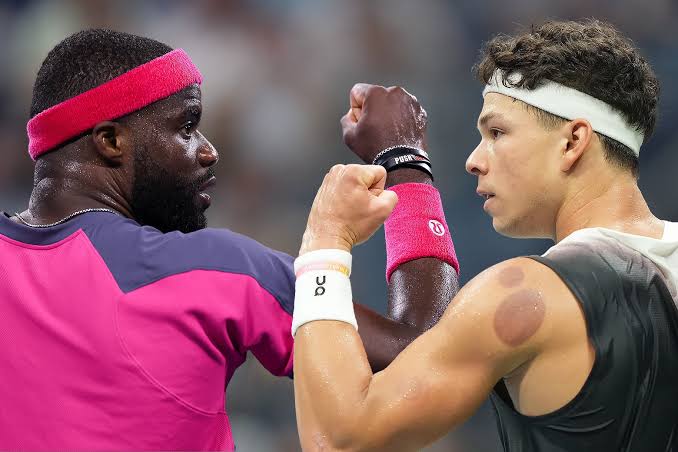
Tennis reached a historic moment at the US Open when Frances Tiafoe and Ben Shelton became the first two Black American men to meet in a Grand Slam semifinal during the Open Era. Their meeting was more than another high-profile American tennis match. It represented decades of progress in a sport where Black players have historically faced barriers to access, opportunity and recognition.
The significance of the matchup was also connected to Arthur Ashe, the legendary American tennis player whose name is attached to the tournament’s largest stadium. Ashe became the first Black man to win a Grand Slam singles title when he captured the US Open in 1968. He later won the Australian Open and Wimbledon, becoming one of the most important figures in tennis history both on and off the court.
For younger players watching Tiafoe and Shelton compete on the same stage, the sight offered something that previous generations rarely had: two Black American men competing against each other at the very top of the sport.
Tiafoe’s Journey From Public Courts to the US Open
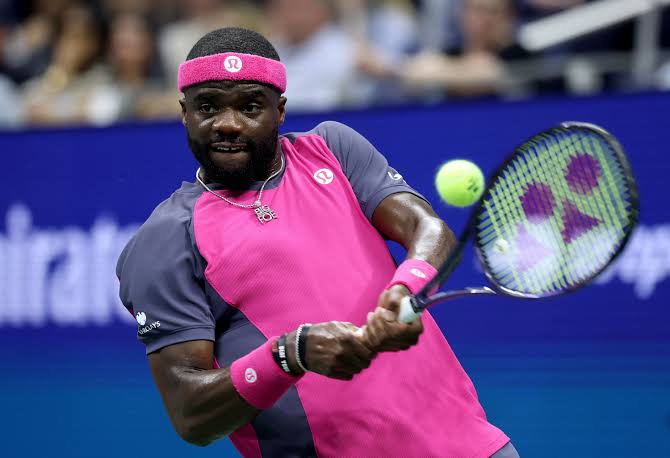
Frances Tiafoe’s story is closely connected to the idea of opportunity. His parents emigrated from Sierra Leone, and his father worked at the Junior Tennis Champions Center in Maryland. Tiafoe grew up around the facility and began learning tennis at an unusually young age.
His path was different from the traditional route followed by many professional players. Rather than coming from a wealthy tennis background, Tiafoe developed his skills by taking advantage of the opportunities available to him. He watched older players train, practiced whenever he could and gradually developed into one of America’s most recognizable tennis stars.
That journey has made Tiafoe an important figure for organizations working to make tennis more accessible. His success demonstrates how talent can emerge when young players are given access to courts, coaching and competitive opportunities.
His rise also shows why representation matters. When children see someone with a background similar to theirs competing successfully, professional sport can begin to look like a realistic possibility rather than something reserved for people from different communities.
Black American tennis : Ben Shelton Represents the Next Generation
Ben Shelton represents another stage in the development of Black American tennis. Younger than Tiafoe, Shelton arrived on the professional scene with a powerful game, impressive athleticism and an increasingly confident presence on the biggest stages.
His route into professional tennis was also shaped by a strong tennis family. Shelton played college tennis at the University of Florida before turning professional, and his rapid rise demonstrated that American tennis had another major young talent ready to compete internationally.
At the US Open, Shelton produced one of the biggest victories of his career by defeating defending champion Carlos Alcaraz in a dramatic five-set quarterfinal. Tiafoe also produced a remarkable comeback against Alex Michelsen, recovering from two sets down to reach the semifinals. Their victories created the historic all-Black American semifinal.
Black American tennis : More Than a Match
The importance of the Tiafoe-Shelton showdown goes beyond the final score.
For decades, Black athletes have had to overcome obstacles that went beyond sporting ability. Tennis can be an expensive sport, with costs associated with equipment, coaching, court access and travel. Those expenses can make it difficult for talented children from less privileged backgrounds to enter the competitive system.
That is why moments like this can have an impact beyond one tournament.
A young player watching Shelton’s power or Tiafoe’s creativity may not simply see two professional athletes. They may see a possible future for themselves. The presence of successful Black players can encourage families to introduce their children to tennis and can strengthen efforts to make the sport more accessible.
Martin Blackman, a former USTA player-development executive who has also worked with Tiafoe, has spoken about the importance of creating opportunities for a broad and diverse group of young players. Tiafoe’s own career has become part of that larger effort.
Arthur Ashe’s Legacy Continues
Any discussion of Black American tennis eventually returns to Arthur Ashe.
Ashe competed during an era when racial barriers were far more visible, and his success carried significance far beyond his results. His achievements helped challenge assumptions about who belonged at the highest levels of tennis.
More than five decades later, Tiafoe and Shelton are competing in an environment that has changed considerably. They are able to express themselves differently, develop individual personalities and compete primarily as athletes rather than being forced to carry the entire burden of representation.
That change does not mean every barrier has disappeared. However, the presence of multiple Black American stars at the top of the game demonstrates how much progress has been made.
Black American tennis : Opportunity for the Next Generation
The most important part of this moment may ultimately happen away from the US Open courts.
Tiafoe has used his platform to support programs that combine tennis and education for underserved communities. His charitable work reflects the idea that success can become more meaningful when it creates opportunities for others.
The same principle applies to Shelton. His emergence as a major American tennis player gives younger athletes another example of what is possible.
Representation can create a cycle. One successful athlete inspires another player, that player attracts attention to the sport, and increased participation creates opportunities for the next generation. Over time, what once seemed extraordinary can become normal.
A Sign of Tennis’ Changing Future
The Tiafoe-Shelton semifinal was historic because of what it represented, but the players themselves still had a match to win. Once they stepped onto the court, friendship, history and symbolism had to give way to competition.
Shelton eventually prevailed, reaching his first Grand Slam final at the age of 23. Tiafoe’s run ended, but his role in creating the moment was already significant. Their meeting became another chapter in the continuing evolution of American tennis.
The bigger victory may be what the match inspires.
For a young Black child picking up a racket for the first time, seeing Tiafoe and Shelton compete under the lights at Arthur Ashe Stadium can send a powerful message: there is a place for you in this sport.
That is why this showdown matters. It was not simply a semifinal between two talented American players. It was evidence of progress, a reminder of the importance of opportunity and a glimpse of what the future of Black American tennis could look like.
