


Science is a part of everyday life. It helps us understand the world, nature, space, living things, and many of the technologies we use. From the phone in your hand to the medicine used by doctors, science plays an important role.
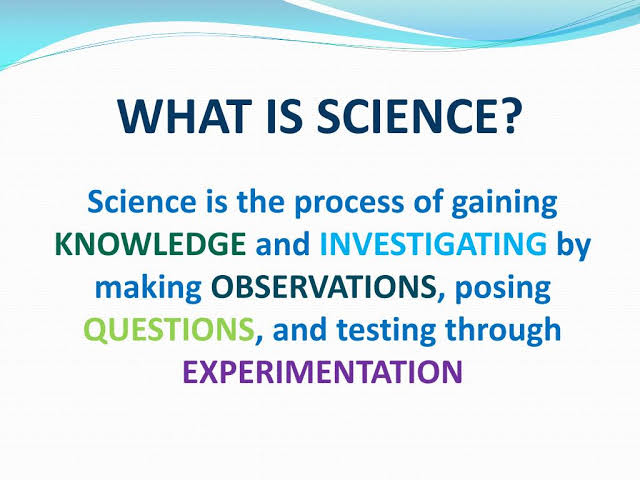
But In simple words, science is a way of learning about the natural world. It uses observation, questions, experiments, evidence, and logical thinking. Scientists use these methods to discover how things work and why certain events happen.
What Is Science?
If you are wonderin it is a systematic way of learning about the natural world. Science helps us understand how things work through observation, questions, experiments, evidence, and logical thinking. Scientists study different subjects, collect information, and test their ideas to find reliable answers. This process helps us learn more about nature, living things, Earth, space, and the world around us.
For example, imagine that a scientist wants to know why a plant is growing slowly. The scientist may observe the plant and check its water, sunlight, soil, and temperature. After collecting information, the scientist can develop an idea about the possible cause.
The scientist can then test that idea. This process helps turn a simple question into scientific research.
Science is not limited to one subject. It includes many different fields. Each field focuses on a particular part of the natural world.
How Does Science Work?
Science usually starts with a question. A person notices something and wants to understand it better.
The next step is observation. Scientists collect information about the subject they are studying. They may use their senses, measuring tools, computers, cameras, microscopes, or other equipment.
After making observations, scientists may create a hypothesis. A hypothesis is a possible explanation that can be tested.
Scientists then collect more evidence through experiments or observations. They study the results and compare them with their original idea.
If the evidence does not support the hypothesis, scientists may change it or develop a different explanation. This is an important part of science because scientific knowledge can improve when new evidence becomes available.
Why Is Evidence Important?
Evidence is one of the most important parts of science. Scientific ideas need support from observations, measurements, experiments, or other reliable information.
For example, scientists studying a new treatment need evidence to understand whether it works. They may conduct studies, compare results, and examine possible risks.
Evidence helps scientists separate facts from assumptions. It also allows other researchers to examine the same work and conduct additional studies.
This makes science a process that can be checked and improved over time.
Main Branches of Science
Science has many branches. Each one focuses on a different area of knowledge.
Physics
Physics studies matter, energy, movement, forces, electricity, and many other physical processes. It helps explain why objects move, how electricity works, and how forces affect the world.
