


Serious Questions After the Potomac Crash
A new report has raised serious questions about FAA flight paths after the deadly 2025 Potomac midair collision. The findings suggest that some flight-path and air traffic concerns were not addressed as quickly as expected. The crash has renewed concerns about aviation safety around Washington, D.C.
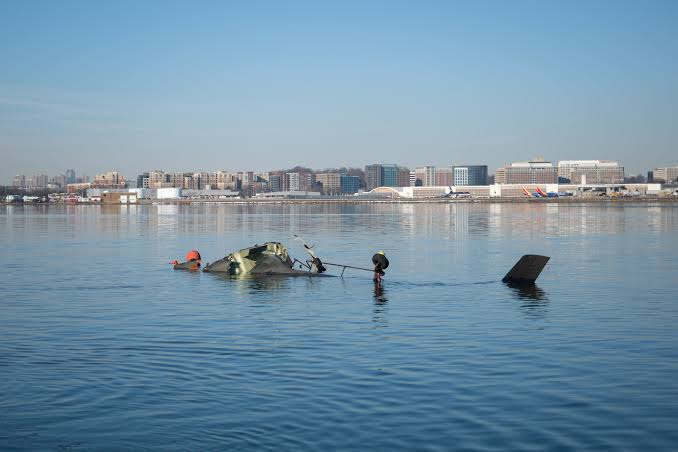
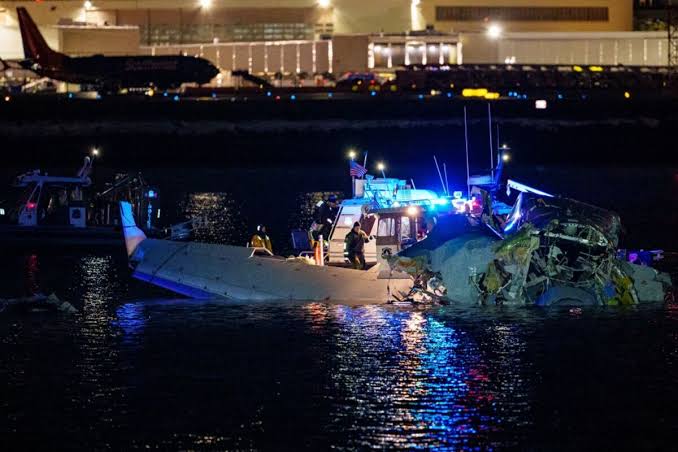
The crash involved an American Airlines regional jet and a U.S. Army Black Hawk helicopter near Ronald Reagan Washington National Airport. Everyone aboard both aircraft was killed.
The tragedy shocked the country and immediately led to questions about how the aircraft were managed in the busy Washington, D.C., airspace.
What Happened in January 2025?
The collision happened while the passenger aircraft was approaching Ronald Reagan Washington National Airport. At the same time, the military helicopter was operating in the same area.
The accident quickly became one of the most serious aviation disasters in the United States in recent years. Investigators began examining the actions of the pilots, air traffic controllers and agencies responsible for managing the airspace.
They also looked at the flight routes used by helicopters and commercial aircraft.
The investigation highlighted the challenges of managing different types of aircraft in a limited area. Commercial planes, military helicopters and government aircraft regularly operate around Washington.
Concerns About FAA Flight Paths
The latest report has increased attention on the Federal Aviation Administration and its response after the crash.
Safety officials can change flight routes when they discover that existing procedures create unnecessary risks. Such changes can help create greater separation between aircraft.
However, the report suggests that some changes connected to flight paths and traffic procedures were not completed as quickly as some expected.
This has led to an important question: Why were potential safety problems not fixed sooner?
After a fatal accident, aviation authorities are expected to examine every possible risk. They must then decide whether new procedures, route changes or additional restrictions are needed.
FAA flight paths : Washington Has Complex Airspace
The area around Washington, D.C., presents unusual challenges for air traffic controllers.
The region includes major commercial airports, military facilities and restricted government airspace. Helicopters also use established routes through the area.
As a result, controllers must closely monitor many aircraft at the same time.
Even a small mistake or misunderstanding can create a dangerous situation. Therefore, clear communication and well-designed flight paths are extremely important.
The Potomac crash showed how difficult it can be to manage different aircraft in the same busy airspace.
FAA flight paths : Why Delays Can Be Dangerous
Following a major aviation accident, safety improvements are intended to reduce the chance of another tragedy.
If officials identify a risky flight pattern, delaying changes can leave the same potential danger in place.
Flight paths are especially important because they determine where aircraft are expected to travel. Changing a route can sometimes create more space between aircraft and reduce the workload for controllers.
For that reason, any delay in improving a known safety problem can attract serious attention.
The latest findings may now increase pressure on the FAA to explain how it evaluates and implements safety changes after major accidents.
Air Traffic Controllers Face Heavy Pressure
Air traffic controllers are an important part of the aviation safety system. However, they work within procedures and routes established by aviation authorities.
Controllers must track aircraft positions, communicate with pilots and manage traffic continuously.
In busy airspace, their workload can become extremely demanding. They may have to handle commercial aircraft while also monitoring helicopters and other operations.
That is why aviation safety cannot depend on one person alone.
Instead, several layers of protection are needed. These include proper flight planning, reliable communication, radar systems, aircraft technology and clear air traffic procedures.
Calls for Greater FAA Oversight
The report is expected to increase scrutiny of the FAA and its safety decisions.
Lawmakers, aviation experts and members of the public may want more information about how quickly regulators respond when serious risks are discovered.
The focus is not only on what happened during the January 2025 crash. It is also on what authorities did afterward.
Aviation safety depends on learning from accidents. When investigators discover weaknesses, those problems should be addressed through practical and effective measures.
A Wider Warning for U.S. Aviation
The Potomac collision has also raised broader concerns about the future of America’s increasingly busy skies.
Commercial airlines are not the only aircraft using U.S. airspace. Military aircraft, helicopters, drones and other aviation operations are also increasing.
Consequently, coordination between different users is becoming more important.
The tragedy shows why aviation authorities must regularly review old procedures. A flight path that once appeared safe may need to be changed as traffic patterns and operations evolve.
Lessons From the Potomac Tragedy
The most important lesson from the crash is that identifying a safety risk is only the first step.
Authorities must also act on that information.
The latest report has renewed questions about whether the FAA moved quickly enough to address concerns surrounding flight paths and air traffic procedures after the collision.
For the families who lost loved ones, the tragedy can never be undone. However, stronger safety measures could help ensure that similar circumstances do not lead to another disaster.
The aviation industry will now face continued pressure to make the lessons from the Potomac collision part of lasting improvements in U.S. airspace safety.
