

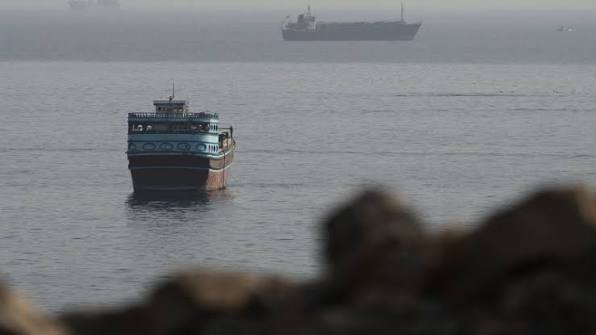

Iran says it has reached an understanding with Oman on a framework for managing maritime traffic through the Strait of Hormuz, a development that could have major consequences for global energy markets and international shipping. The proposed arrangement comes after months of tension surrounding the strategic waterway, where disruptions have raised concerns about oil supplies, shipping costs and regional security. While Iranian officials have described progress with Oman as significant, the details of the framework are still being worked out, and major questions remain about how the system would operate in practice.
The Strait of Hormuz is one of the world’s most important energy corridors. Any agreement that allows commercial vessels to move through the waterway more predictably could help reduce uncertainty in global oil markets. However, disagreements over navigation rights, potential fees and the role of Iran in controlling vessel movements mean the proposed framework faces substantial challenges before it can become a stable long-term arrangement.

Iran and Oman Move Toward a Maritime Framework
Iran and Oman have been discussing ways to establish a new mechanism for navigation through the Strait of Hormuz for months. Tehran has said it does not want the waterway to remain closed indefinitely and has been working with Oman on rules governing maritime movement. In earlier discussions, Iranian officials said the two countries were considering new conditions under which the strait could operate.
The latest developments suggest that those discussions have moved beyond an initial exchange of ideas. Reports indicate that Iran and Oman have been working toward a framework that could divide traffic between routes closer to their respective waters. Under the emerging proposal, vessels entering the Persian Gulf could use a route closer to Iran, while outbound ships could travel nearer to Oman. The objective is to establish a controlled and predictable system while reducing the risk of confrontation between vessels and military forces.
However, reaching a framework does not necessarily mean that the Strait of Hormuz has been fully reopened. The exact operating rules, implementation process and broader political conditions still need to be resolved.
Why the Strait of Hormuz Matters
The importance of the Strait of Hormuz extends far beyond Iran and Oman. The narrow waterway connects the Persian Gulf with the Gulf of Oman and the wider Arabian Sea, making it a crucial route for international energy shipments. Oil and gas producers in the Gulf depend heavily on the passage to reach global markets.
When traffic through the strait is disrupted, the consequences can quickly spread across international markets. Shipping companies may face longer routes, higher insurance costs and increased security risks. Energy traders can also react to uncertainty by pushing oil prices higher because of fears that supplies could become more difficult or expensive to transport.
That is why even the possibility of a new navigation arrangement has attracted attention from governments, shipping companies and financial markets. Reuters reported that Gulf stock markets were watching developments closely as investors waited for clearer evidence about the future of the waterway.
Iran Oman Strait of Hormuz : The Dispute Over Shipping Fees
One of the biggest obstacles is the question of whether vessels should pay fees for passing through the strait. Iran has discussed charging ships for maritime services, describing the proposed payments as related to navigation and security rather than simply calling them transit tolls.
That distinction is important because the idea of mandatory charges has attracted opposition from the United States and concerns within the international shipping industry. Reuters reported that Iranian proposals have involved fees based on cargo value, while Oman has considered a lower level of payment. Shipping companies have warned that such a system could create legal, insurance and financial complications.
The International Maritime Organization has also emphasized the importance of freedom of navigation. The organization has said there is no legal basis for countries to introduce payments, tolls, fees or discriminatory conditions for passage through international straits.
For that reason, the final design of any Iran-Oman arrangement will be closely examined. A system that is viewed as predictable and consistent with international maritime practices could be easier for shipping companies to accept, while compulsory charges or restrictions could create another source of international tension.
Iran Oman Strait of Hormuz : Oman’s Important Diplomatic Role
Oman occupies a unique position in the dispute because it maintains relationships with both Iran and Western countries. Muscat has historically played a diplomatic role in difficult regional negotiations, making it an important intermediary as Tehran seeks to establish a new system for the waterway.
The two countries have already publicly acknowledged discussions about the future management of the Strait of Hormuz. A joint statement released in June said Iran and Oman would continue consultations through a joint committee involving their foreign ministries. It also referred to discussions about shipping management, related services and the costs associated with those services.
Oman’s involvement could therefore provide a diplomatic bridge between competing interests. Tehran wants recognition of its sovereignty and security concerns, while international shipping interests want reliable passage without unpredictable restrictions or excessive costs.
Iran Oman Strait of Hormuz : What the Framework Could Mean for Global Markets
If successfully implemented, an Iran-Oman framework could bring greater stability to the energy market. A dependable maritime route would reduce some of the uncertainty facing oil traders and shipping companies and could help lower risk premiums associated with Gulf transportation.
The impact would not necessarily be immediate. Shipping companies would need clear instructions, insurance guarantees and confidence that the rules would remain stable. Tanker operators are particularly sensitive to sudden changes because vessels carrying energy products can face enormous financial exposure when routes become unsafe or unpredictable.
Markets will therefore be watching actual vessel movements rather than relying only on political announcements. A sustained increase in commercial traffic would provide stronger evidence that the framework is functioning.
Major Questions Remain
Despite the reported progress, the proposed arrangement still faces several unresolved issues. The biggest questions involve who will have authority over individual vessels, whether ships will need prior coordination, how security will be provided and whether any service fees will be compulsory.
There are also wider disagreements over the legal status of maritime control. The International Maritime Organization has stressed that the existing traffic separation scheme in the Strait of Hormuz has long supported safe navigation between Iran and Oman.
The shipping industry will also want certainty over insurance and sanctions exposure. Reuters reported that proposed Iranian payments could create difficulties for companies because of existing U.S. sanctions and insurance restrictions.
What Happens Next?
The reported Iran-Oman framework could represent an important step toward restoring more predictable shipping through the Strait of Hormuz, but it is not yet the end of the dispute. The success of the proposal will depend on how Iran, Oman, the United States and other relevant parties resolve disagreements over navigation, fees, security and international maritime rules.
For now, the key issue is whether the emerging framework can translate into consistent commercial traffic. If it does, the agreement could ease pressure on energy markets and reduce one of the world’s most significant shipping risks. If disagreements over control and payments remain unresolved, however, uncertainty around the Strait of Hormuz could continue.
The coming weeks are likely to show whether the Iran-Oman understanding becomes a practical maritime arrangement or remains another stage in the long-running diplomatic struggle over one of the world’s most strategically important waterways.
